
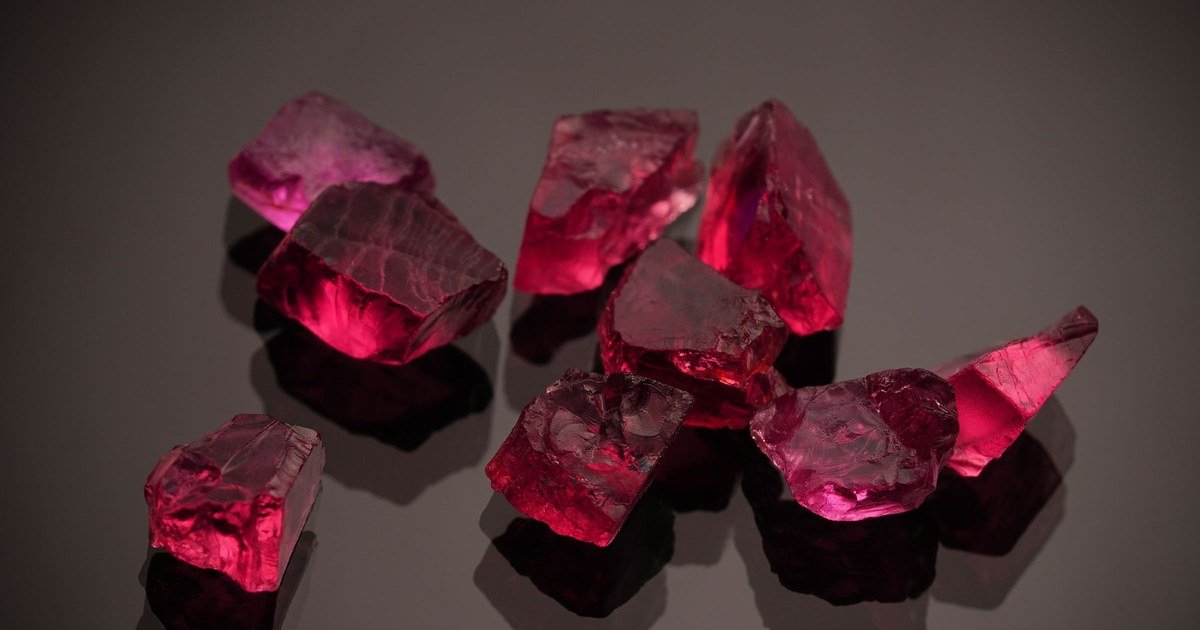
Gemstone Treatments in India: Heat, Dye, Glass Filling and Disclosure Basics
Many of the coloured gemstones sold in India have been treated in some way. Treatment is not always bad. Some methods are old, stable and widely accepted. Others change a stone’s value sharply or need special care. The real problem is not treatment itself, but treatment that is hidden. This guide explains the common gemstone treatments, how gemologists spot them and why honest disclosure protects buyers and sellers alike.
Key Takeaways
- Heating, oiling, dyeing, glass filling, irradiation and diffusion are among the most common gemstone treatments.
- Some treatments are stable and accepted, while others reduce value or need special care.
- Clear disclosure at the point of sale is the line between fair trade and misrepresentation.
Why Gemstones Are Treated
Untreated, top quality gemstones are rare. Treatments improve colour, clarity or durability so that more stones reach a saleable standard. This makes attractive gems affordable for more buyers, which is one reason treatments are so widespread.
The trade generally accepts treatment when it is disclosed and when the buyer pays a price that reflects it. Problems begin when a treated stone is sold as untreated, or when a fragile treatment is not explained. A ruby that looks perfect but contains lead glass is a very different product from a natural, heated ruby, even if they look alike in a shop.
Heat Treatment
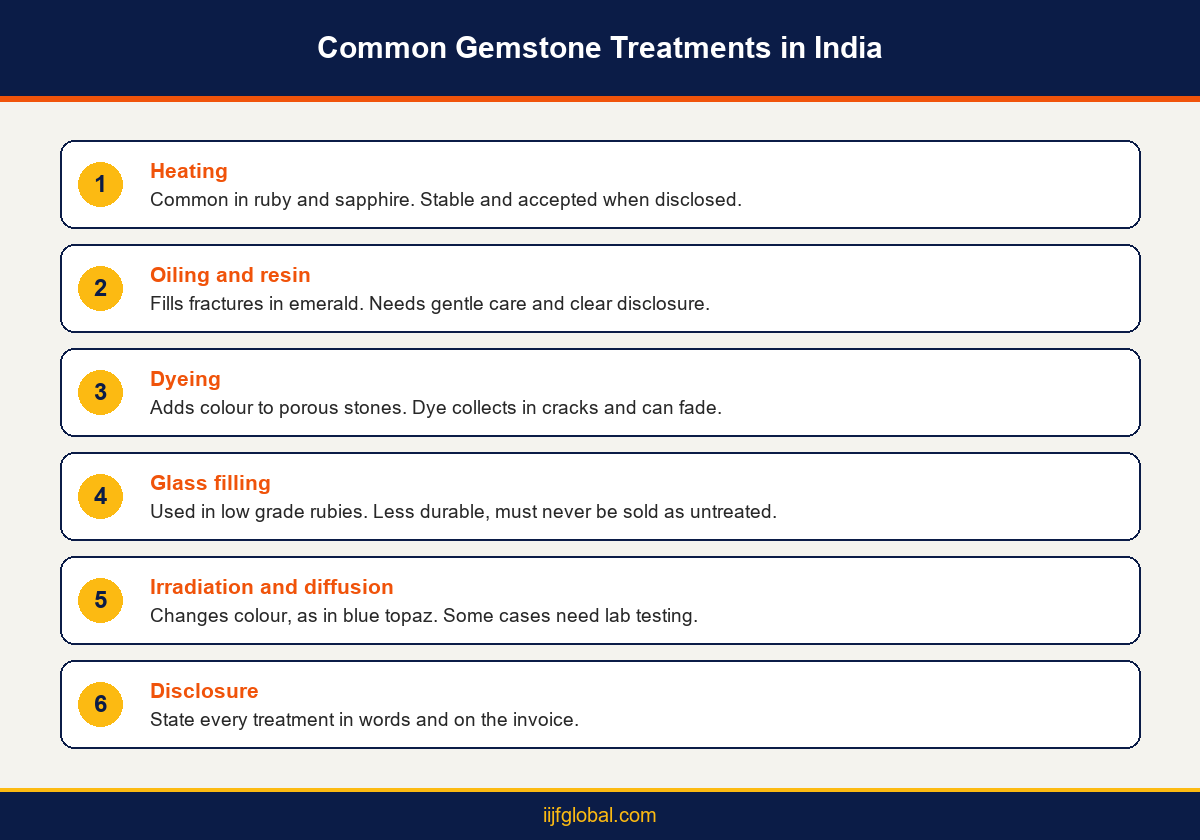
Heating is the most common gemstone treatment. It is widely used on corundum, the mineral family that includes ruby and sapphire, to improve colour and clarity. Many yellow, blue and pink sapphires in the market have been heated.
Heat treatment is generally stable and permanent, and the trade broadly accepts it when disclosed. Gemologists often detect heating through changes in inclusions under a microscope, such as altered crystals or melted silk. Some cases need a laboratory to confirm. Untreated stones of the same quality usually command a premium.
Oiling and Resin Filling
Emeralds often contain fractures that reach the surface. Filling these with oil or resin makes them less visible and improves clarity. This practice is very old and very common.
Fillers can dry out, discolour or be affected by heat, solvents and ultrasonic cleaners. That is why oiled emeralds need gentle care and why disclosure matters. Under magnification, gemologists may see a flash effect, flattened bubbles or filler residue in fractures.
Dyeing
Dyeing adds or strengthens colour. It is common in porous or fractured materials such as some quartz, jade, onyx, beads and lower quality stones. Dye may collect in cracks, creating colour concentrations visible under a loupe.
Dyed colour may fade or rub off over time, especially with cleaning. Simple checks, such as looking for colour in fractures, can raise suspicion, while proper testing confirms it. Dyed stones should always be sold as dyed and priced accordingly.
Glass Filling: The Treatment Buyers Must Know
Glass filling, often with lead glass, is used heavily on low grade rubies. Fractures and cavities are filled with glass that dramatically improves clarity and look. In heavy cases, the stone may contain so much glass that the trade calls it a composite rather than a treated ruby.
Glass filled stones are less durable. The glass can be damaged by heat, by contact with chemicals or even by everyday acids, and jewellery repairs can harm it. Under magnification, gemologists look for gas bubbles in the glass, a blue or orange flash effect and differences in surface lustre. These stones must never be sold as untreated rubies.
Irradiation, Diffusion and Other Methods
Irradiation is used on some stones, such as blue topaz, to change colour, usually followed by heating. Diffusion treatments, including beryllium diffusion of sapphires, add colour from outside the stone and can be hard to detect without laboratory testing.
Diamonds can also be treated, for example by fracture filling or by high pressure, high temperature processes that change colour. This is one reason why diamond grading reports note treatments, and why verifying a report against the stone is so important, as explained in our guide on how to read a diamond certificate.
Why Disclosure Matters
Disclosure is simple in principle. The seller tells the buyer what treatment a stone has received, in words and in writing. International trade bodies such as CIBJO publish standards that set out how treatments should be described, and responsible jewellers follow them.
Good disclosure protects everyone. Buyers pay a fair price and know how to care for their stones. Sellers avoid disputes, returns and damage to their reputation. For gemologists and store teams, the ability to identify and explain treatments is a core professional skill, closely linked to jewellery forensics.
Conclusion
Gemstone treatments are a normal part of today’s market, from stable heating to fragile glass filling. What matters is knowing what was done and saying so clearly. Learn the signs, use the right tools and always disclose. To build practical skills in treatment detection with real stones, explore IIJF Global’s Diploma in Gemology or contact our team.
Frequently Asked Questions
Q1: What is a treated gemstone?
A treated gemstone has been processed after mining to improve its colour, clarity or durability, for example by heating, oiling, dyeing or filling fractures with glass.
Q2: Are treated gemstones fake?
No. A treated gemstone is still a natural gem, but its appearance has been improved. It becomes a problem only when the treatment is hidden or the stone is sold as untreated.
Q3: Is heat treatment acceptable in sapphires and rubies?
Heat treatment is common, generally stable and widely accepted by the trade when disclosed. Untreated stones of similar quality usually command a higher price.
Q4: What is a glass filled ruby?
It is a low grade ruby whose fractures and cavities have been filled with glass, often lead glass, to improve clarity. It is less durable and must be disclosed clearly.
Q5: How can I tell if a gemstone has been dyed?
Dye often collects in cracks and creates colour concentrations visible under a loupe. Suspicion should be confirmed through proper gemological testing.
Q6: Why are emeralds oiled?
Emeralds often have surface reaching fractures. Oil or resin fills them to make them less visible. The filler can dry or change over time, so gentle care is needed.
Q7: Can treatments be detected without a laboratory?
Many treatments show signs under a gemological microscope, such as bubbles or flash effects. Some, like certain diffusion treatments, need advanced laboratory testing.
Q8: Do treatments affect gemstone value?
Yes. Treated stones generally sell for less than untreated stones of similar appearance, and less durable treatments such as glass filling reduce value significantly.
Q9: Should jewellers disclose gemstone treatments?
Yes. Responsible jewellers disclose treatments in words and on the invoice, following trade standards. Disclosure protects buyers and the store’s reputation.
Q10: Where can I learn to identify gemstone treatments?
IIJF Global’s Diploma in Gemology teaches treatment detection using microscopes and real treated stones, with online and hybrid options.